At the invitation of Stockholm University, Professor Zhao Minghao, Deputy Director of the Center for American Studies, Institute of International Studies at Fudan University (IIS Fudan), visited Sweden from September 17 to 20 for a series of academic engagements. Over four days, he delivered a public lecture and joined in‑depth discussions with Swedish government officials, think‑tank researchers, and scholars from across Europe on China’s foreign policy, China–U.S. relations, the prospects of a potential “Trump 2.0” administration, and broader international political and economic dynamics.
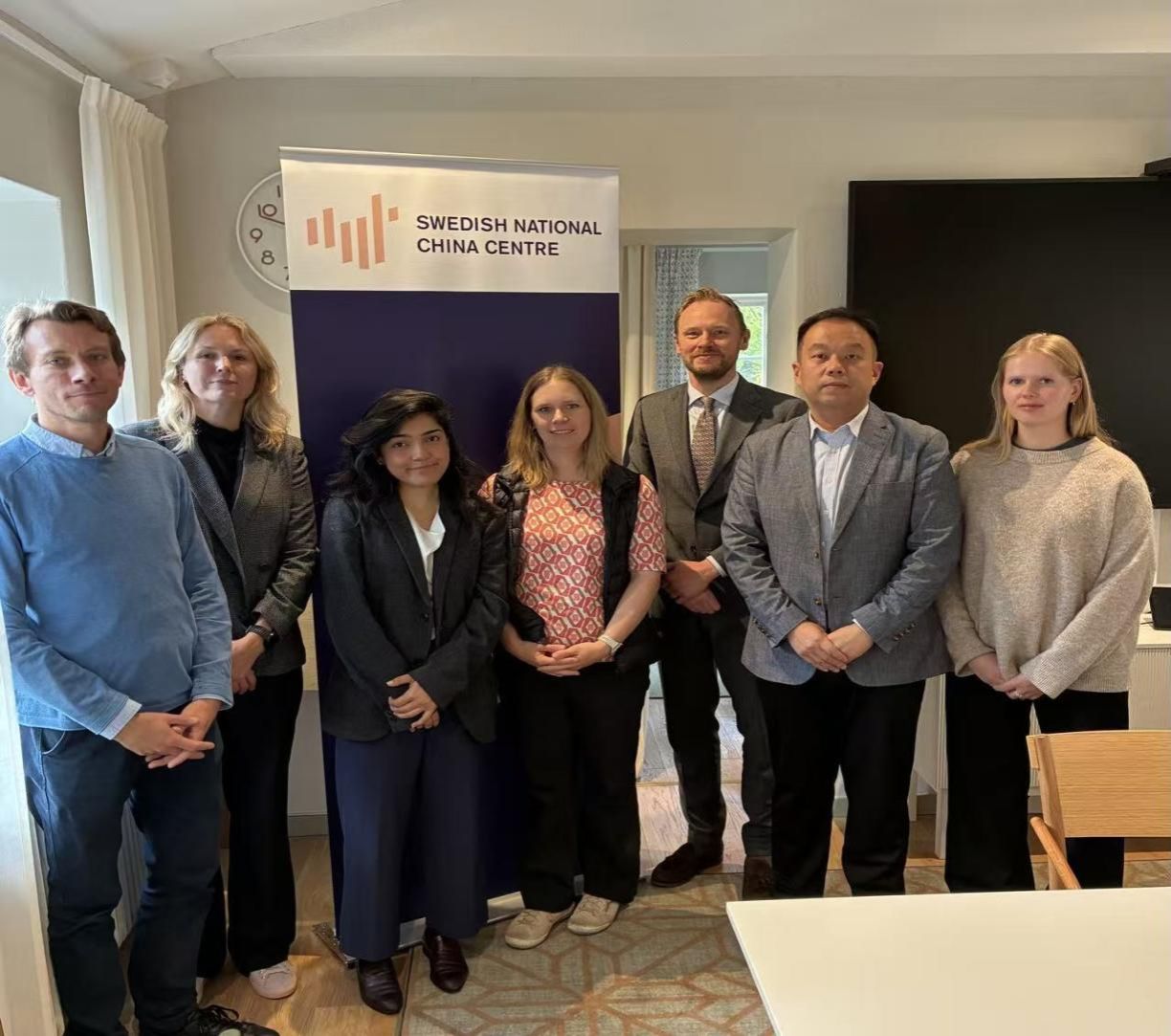
On September 18, Professor Zhao spoke at the Swedish National China Centre, in an event hosted by its director, Professor Björn Jerdén. The audience brought together officials and experts from the Ministry for Foreign Affairs, Ministry of Defence, the Swedish Institute of International Affairs, and the Swedish Defence Policy Research Centre, creating a cross‑community forum for policy‑relevant scholarship.
Building on recent debates about security and technology, Professor Zhao outlined analytical lenses—such as the security–development nexus, geo‑technology, and the role of “technology hawks.” He offered perspectives on China’s foreign policy, the Belt and Road Initiative, and the evolution of China–U.S. relations. Emphasizing practical cooperation, he argued that China and European partners, including Sweden, should intensify strategic communication, manage economic and technological differences constructively, and coordinate responses to uncertainties that could arise under a potential second Trump administration. The subsequent Q&A extended the discussion to China’s 15th Five‑Year Plan, U.S.–China competition in Southeast Asia, and China–Russia relations. Professor Zhao underscored the importance of assessing China’s ongoing domestic transformation—and the complexity of its external policy—with greater nuance and objectivity in European analysis.
From September 19 to 20, Professor Zhao participated in the international symposium “A New Cold War from a Global Perspective,” organized by Stockholm University. Joining Professor Emeritus Barry Buzan of the London School of Economics and more than ten scholars from Sweden, Denmark, France, Italy, Switzerland, Germany, and Colombia, he contributed to sessions that examined the theoretical foundations and analytical value of the “new Cold War” concept. Discussions compared the current environment with the U.S.–Soviet Cold War, explored similarities and differences between China–U.S. and U.S.–Russia relations, and assessed implications for the global political economy.
In his remarks at the symposium, Professor Zhao analyzed scenarios for China–U.S. relations should a second Trump term materialize. He highlighted how shifts within U.S. domestic politics—including the rise of right‑wing populism and illiberal democratic tendencies—shape bilateral interactions. He also noted that Washington’s framing of a “competitive multipolar world” warrants close attention. Reiterating China’s long‑term approach, he cautioned against confining the relationship to a strategic‑competition paradigm, stressing China’s interest in averting a “new Cold War” through a new model of major‑power relations.
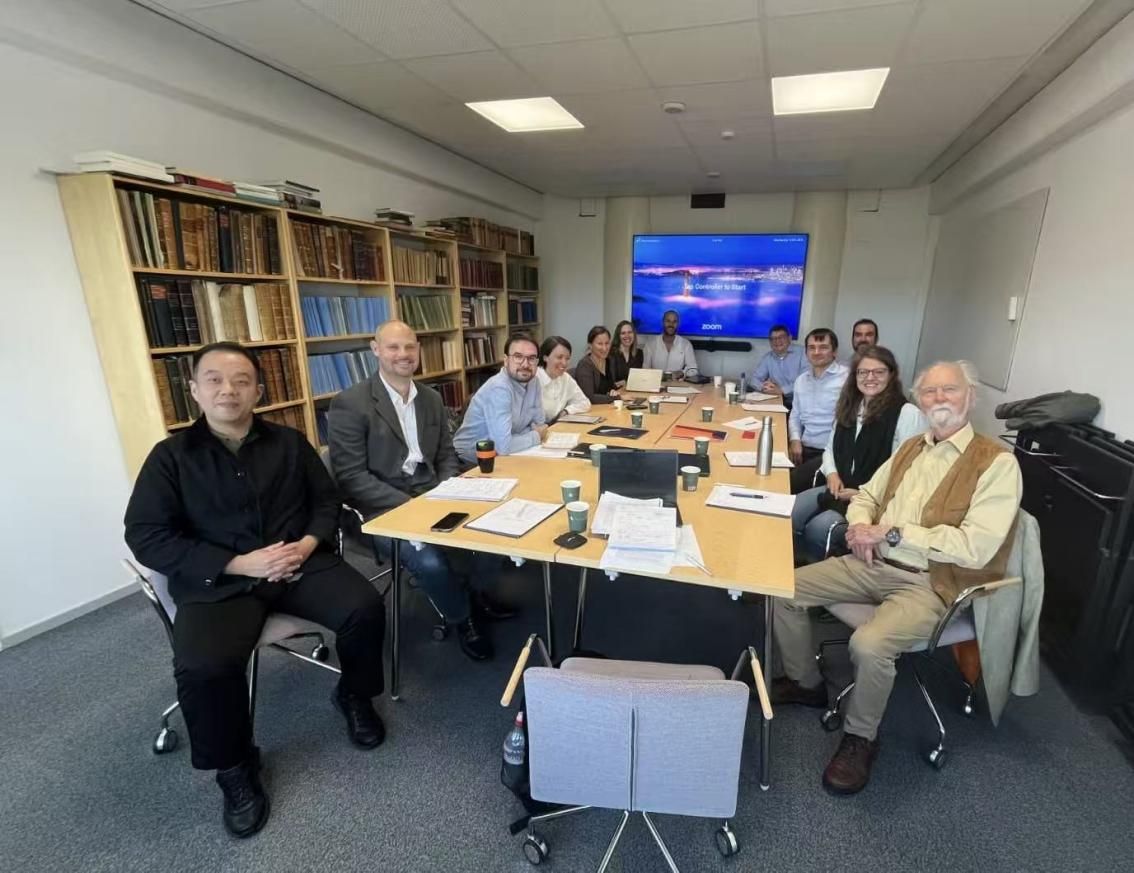
Taken together, the lecture and symposium offered fresh vantage points for studying the United States and China–U.S. relations in a genuinely global context, while also deepening ties between Fudan University and European academic and policy institutions. The visit builds on Professor Zhao’s earlier engagements this year, including his participation in a trilateral China–U.S.–Europe dialogue hosted by organizations such as the European Institute of Peace. There, he exchanged views with former Swedish Minister for Democracy, Integration and Gender Equality Jens Orback, former Dutch Minister of Foreign Affairs Bert Koenders, former EU Ambassador to China Markus Ederer, and U.S. senior diplomat Susan Thornton on practical ways to maintain stability among major powers amid evolving global conditions.